
The Challenge: Melting Winters, Threatened Resorts
Climate change is compressing ski seasons worldwide and putting the $18 billion global ski tourism industry under structural pressure. At +4°C warming, ~98% of European resorts are at risk. The bottleneck for resort operators isn't pricing or grooming — it's the wet-bulb temperature, the physical ceiling above which conventional snowmaking simply doesn't work.
DeepSnow is the polymer platform built to push that ceiling back. We pair a wet lab with an AI polymer discovery engine, and we ship a real product portfolio. Lead product: SL6733.
What SL6733 Actually Is
SL6733 is not an antifreeze. It's a two-component polymer additive dosed at 6-7.6 ppm into resort snowmaking water.
- Component X — ultra-high molecular-weight (15-20 MDa) anionic poly(acrylamide-co-sodium acrylate). The carboxylate (COO⁻) groups disrupt Ostwald ripening at growing ice surfaces, inhibiting recrystallization and producing finer, denser, more durable snow.
- Component Y — cold-water-swelling starch nucleator. Provides distributed nucleation sites throughout the water volume.
The combined effect: +3°C wet-bulb advantage, which unlocks 300-500 additional snowmaking hours per resort, per season, and an estimated $2.4-2.8M EBITDA uplift per resort.
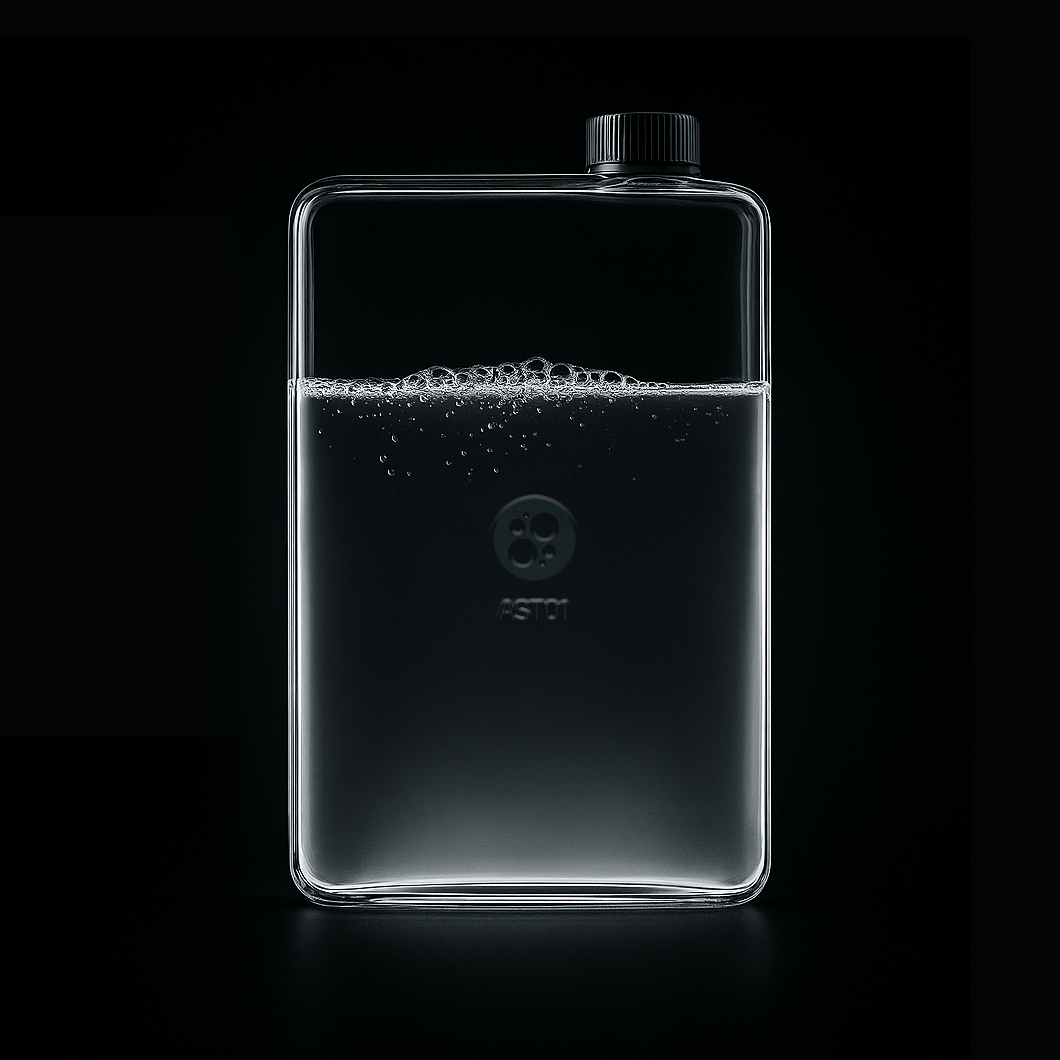 SL6733: ultra-high MW polymer + starch nucleator. Drop-in dosing at 6-7.6 ppm.
Why Now: An Incumbent Under National Moratoriums
The dominant snowmaking additive — Snomax — is a biological product that's been restricted in France (2005 moratorium), Austria, and Bavaria. The market sits at $30-80M today with effectively zero synthetic polymer competition. SL6733 is the EU-compliant, regulatory-defensible alternative, engineered to slot under existing TSCA and EU polymer-exemption frameworks.
At 30% adoption of eligible global snowmaking water (~45 billion litres), the addressable revenue is $14-29M/year — and the adjacent verticals (ice rinks, food IRI, cold chain, cryopreservation) extend the same platform into another $10-140M of TAM.
The Platform: Three Layers, Vertically Integrated
DeepSnow is built around three integrated pillars:
- Wet Lab. In-house synthesis, AF4-MALS molecular-weight verification, splat assays for ice recrystallization inhibition, freeze-thaw characterization. Every candidate is made and measured before it ever touches a snowgun.
- AI Discovery Engine. Software that ranks candidate polymer architectures by predicted ice-binding affinity, IRI potency, and manufacturability — then proposes the next experiment for the wet lab. IP-aware: candidates are engineered around existing competitor claims.
- Product Portfolio. SL6733 ships now. The discovery engine produces the next generation.
The Pipeline
- SL6733 — Snowmaking additive · Shipping 2026/27
- DS-100 series — Next-gen synthetic antifreeze glycoprotein polypeptides (Ala/Glu alternating, NCA polymerization), with 91-94% mean-grain-size reduction at 100 µg/mL in lab assays · Pilot 2027/28
- DS-400 — Surface-grafted IRI polymer for ice rink resurfacing systems · R&D
- Beyond — Food IRI, cryopreservation, biologics cold-chain · Horizon
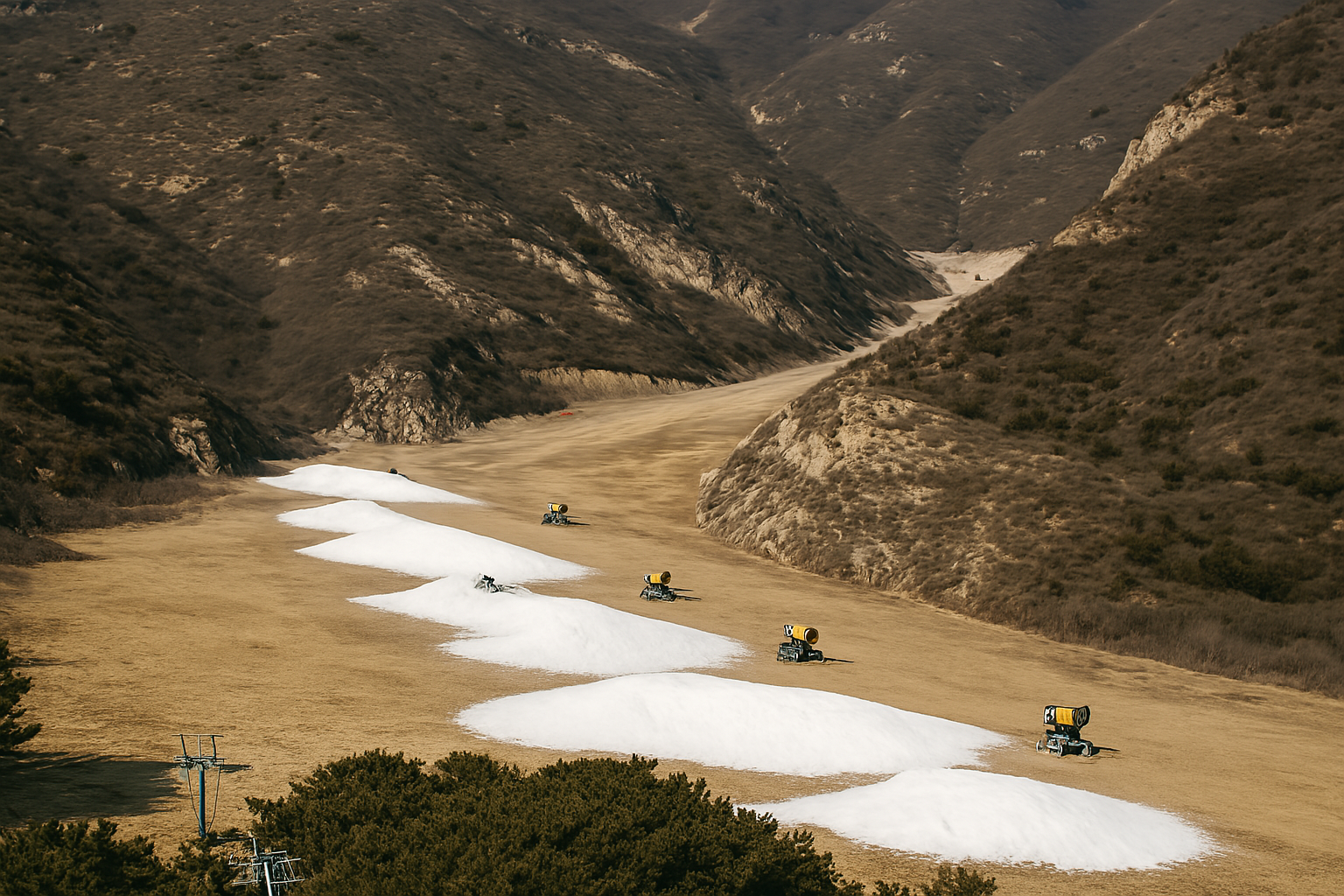 The same chemistry-plus-AI platform extends into adjacent IRI markets.
Environmental & Regulatory
- ✅ Polymer-listed on TSCA; EU polymer exemption applies — no pre-market approval needed.
- ✅ Spec'd to <0.01% residual acrylamide — below WHO drinking-water guidance at operational dose.
- ✅ Biodegradable polyacrylamide + starch chemistry; no biological banlist exposure.
- ✅ Compatible with potable water sources used in resort snowmaking systems.
Conclusion
SL6733 is real, manufactured, and going into resorts for the 2026/27 season. DS-100 and DS-400 follow on the back of the discovery engine. The platform is what compounds.
Whether you're a ski resort operator, an equipment manufacturer, or an impact-driven investor — get in touch.
➡️ Request a pilot or talk to us
(Pilot enrolment form rendered by the layout template.)